Table of Contents
Commercial Roofing Essentials in Central Illinois
Central Illinois businesses face unique challenges with commercial roofing central Illinois, where severe weather like heavy snow, thunderstorms, and high winds often lead to storm damage, leaks, and premature wear on aging flat roofs. These issues can signal the need for replacement if visible damage appears or leaks persist, as commercial roofing systems typically last 20-30 years with proper care. Local building codes, including Illinois requirements for wind uplift resistance up to 90 mph and snow load capacities of 30-40 psf in areas like Peoria and Champaign, ensure structures withstand regional extremes.
River City Roofing, with Illinois license 104015025 and GAF Master Elite certification, delivers reliable commercial roof repair and flat commercial roofing solutions across Central Illinois and neighboring states. Our 24/7 emergency response minimizes downtime for businesses in Bloomington and beyond, while free estimates empower owners to address issues promptly. We handle everything from inspections to full replacements, ensuring compliance with state regulations for safe, durable business roof systems in the Midwest.
Discover how to assess your roof’s condition, explore the benefits of professional services, and learn about our streamlined installation process in the sections ahead. Ready to protect your investment? Contact us today for a no-obligation consultation tailored to your needs.
Understanding Commercial Roofing Needs
In Central Illinois, businesses face unique roofing challenges from seasonal weather patterns, including heavy rains, snow, and occasional severe storms. Recognizing the early signs of roof issues can prevent minor problems from escalating into major disruptions. This section explores key indicators of damage, suitable material options, and maintenance schedules to help property owners protect their investments and ensure operational continuity.
Signs of Commercial Roof Issues in Central Illinois
Commercial roofs in Central Illinois endure harsh conditions like freeze-thaw cycles and high winds, which accelerate wear and tear. Identifying issues early allows for timely commercial roof repair interventions, minimizing downtime for businesses in areas like Peoria and Springfield. Common signs include visible damage from local weather events, such as ice dams forming during winter, which can lead to interior leaks and structural compromise.
Look for these key indicators during routine walks around your property:
- Pooling water: Flat roofs often collect standing water after heavy rains, signaling poor drainage and potential membrane failure.
- Granule loss: On asphalt-based systems, missing granules expose the underlying material to UV damage, a frequent issue in sunny Illinois summers.
- Structural sagging: Buckling or dips in the roof surface suggest weakened support, possibly from accumulated snow loads common in the region.
- Cracks or blisters: These appear from thermal expansion and contraction, exacerbated by Central Illinois’ temperature swings.
- Debris accumulation: Leaves and branches from nearby trees can trap moisture, leading to rot–inspect after fall storms for early detection.
If you notice these, consult professionals for an industrial roof assessment to determine if repair or replacement is needed. Addressing them promptly avoids costly failures during peak business seasons.
Common Materials for Business Roofs
Selecting the right materials for commercial roofing in Central Illinois ensures durability against the area’s variable climate, from humid summers to icy winters. Options like TPO, EPDM, and metal are popular for their resilience and energy efficiency, particularly on flat or low-slope roofs common in commercial structures. For instance, TPO membranes reflect sunlight, reducing cooling costs in hot months, while metal panels withstand high winds from Midwest thunderstorms.
Here are descriptions of top choices, tailored to local needs:
- TPO (Thermoplastic Polyolefin): A single-ply membrane ideal for commercial flat roofing, offering excellent seam strength and UV resistance. Pros include energy savings through white reflective surfaces and a lifespan of 20-30 years; cons are higher upfront costs but long-term ROI in Illinois’ energy-intensive climate.
- EPDM (Ethylene Propylene Diene Monomer): Synthetic rubber sheets suited for flat business roofing options, with strong puncture resistance against hail. Pros: Affordable installation and flexibility in cold weather; cons: Dark color absorbs heat, though insulation additions mitigate this for better winter performance.
- Metal Roofing: Standing seam systems provide superior longevity (30+ years) and fire resistance, perfect for warehouses in windy Central Illinois. Pros: Low maintenance and recyclable; cons: Potential noise during rain, but underlayment solves this.
According to commercial roof insulation insights, pairing these materials with proper insulation enhances R-value, cutting heating bills by up to 20% during Illinois winters. Local projects demonstrate their effectiveness in similar conditions, promoting sustainability and cost control.
Inspection Frequency Recommendations
Regular inspections are crucial for commercial roofs in Central Illinois, where weather extremes like tornadoes and blizzards can cause hidden damage. Businesses should schedule bi-annual checks–in spring and fall–to catch issues before they worsen, plus immediate assessments after storms. This proactive approach extends roof lifespan and safeguards assets, aligning with regional maintenance best practices.
Annual professional evaluations provide thorough coverage beyond DIY efforts. For example, post-tornado inspections in Peoria reveal subtle cracks that self-checks might miss. Engage a top rated roofing contractor Peoria for detailed protocols, including drone surveys and moisture detection, ensuring comprehensive reviews tailored to Illinois roofs.
Tips for effective scheduling:
- Spring check: Focus on winter damage like ice dams and shingle displacement.
- Fall preparation: Clear debris and seal vulnerabilities ahead of snow season.
- Storm response: Inspect within 48 hours of severe weather to document for insurance.
- Documentation: Keep records of findings to track deterioration over time.
Real-world applications from local services emphasize these intervals, preventing failures that could halt operations. By staying vigilant, Central Illinois businesses can transition seamlessly to realizing the operational benefits of a well-maintained roof.
Key Benefits of Professional Commercial Roofing
Investing in professional commercial roofing in Central Illinois provides businesses with robust protection against the region’s unpredictable weather, from severe storms to humid summers. Certified experts like those from River City Roofing ensure installations that not only meet but exceed local standards, delivering long-term value through enhanced durability, energy efficiency, and compliance. These benefits translate into tangible advantages for Peoria-area enterprises, safeguarding assets while optimizing operational costs.
Durability and Longevity Advantages
Professional installations significantly extend the lifespan of commercial roofing systems in Central Illinois, where harsh winters and frequent storms test material resilience. Quality workmanship using high-grade materials can push roof longevity beyond the standard 20-30 years, often reaching 40-50 years with proper care. For instance, GAF products backed by River City Roofing offer extended warranties up to 50 years, protecting against wind damage and hail impacts common in the Midwest.
Key advantages include:
- Resistance to extreme temperature fluctuations, preventing cracks and leaks.
- Reinforced sealing that withstands heavy snowfall and ice dams.
- Rapid storm response capabilities, minimizing downtime for businesses.
In a Peoria case study, a local warehouse benefited from enterprise roof protection that recovered quickly after a tornado, avoiding costly disruptions. This approach to commercial roofing in Central Illinois ensures structures endure seasonal challenges, reducing the need for frequent interventions and providing peace of mind for property owners.
Cost Savings Through Energy Efficiency
Energy-efficient commercial roofing solutions, such as cool roofs and advanced insulation, play a crucial role in lowering utility bills for businesses in Central Illinois. Materials like TPO membranes reflect sunlight, reducing heat absorption during humid summers and cutting cooling costs by up to 30%, according to Midwestern climate studies on ROI from upgrades. Professional installation optimizes these features, ensuring seamless integration that maximizes savings over time.
Preventive maintenance through commercial roof repair further amplifies these benefits, identifying issues early to avoid expensive replacements. The average cost of roof replacement can exceed $10 per square foot, but energy-efficient upgrades yield a return on investment within 5-7 years via reduced energy consumption. For low-slope commercial coverings on flat roofs, this means not only lower operational expenses but also eligibility for utility rebates in Illinois.
Businesses in Champaign and Peoria report substantial reductions in HVAC strain, allowing them to allocate savings toward core operations. By choosing certified providers, owners secure roofs that perform efficiently year-round, turning a necessary expense into a strategic asset.
Enhanced Property Value and Compliance
Hiring a licensed roofing contractor Illinois elevates property value by ensuring adherence to stringent Illinois building codes, such as those outlined in the International Building Code adopted statewide, which mandate certified installers for wind uplift resistance in commercial structures. This compliance not only avoids fines but also streamlines insurance claims, with professionals assisting in documentation for faster approvals post-storm.
Commercial flat roofing offers additional pros, including usable rooftop space for amenities that boost appeal to tenants and appraisers. In the region, these installations enhance marketability, potentially increasing property assessments by 10-15% through demonstrated durability and energy features.
Insurance advantages are notable, as certified roofs qualify for premium discounts and better coverage terms. River City Roofing’s expertise in claims management has helped Peoria businesses recover swiftly, addressing queries on the best services near the area. Overall, these elements fortify enterprise protection, paving the way for seamless professional processes that deliver lasting security.
The Commercial Roofing Process Explained
The commercial roofing process in Central Illinois follows a structured approach to ensure durability and minimal disruption for businesses. From initial consultations to final walkthroughs, each phase prioritizes efficiency, safety, and compliance with local building codes. This guide outlines the key stages, drawing on standard practices used by regional contractors to handle everything from routine maintenance to full replacements.
Initial Assessment and Planning
The journey begins with a comprehensive consultation tailored to your business needs in Central Illinois. A professional team arrives on-site for a thorough inspection, identifying issues like leaks, structural weaknesses, or storm damage. For commercial roofing in Central Illinois, this step considers regional factors such as harsh winters and high winds, which can accelerate wear on flat or sloped roofs.
Next, expect a detailed quote that includes free estimates and options for insurance claim handling. River City Roofing, for instance, offers transparent pricing based on square footage and material choices. A typical checklist covers roof age, ventilation requirements, and energy efficiency goals. This planning phase usually takes 1-3 days, setting clear expectations for the business roof replacement workflow. Costs for assessments are often complimentary, helping owners budget without upfront commitments.
To prepare, gather property documents and discuss operational timelines to avoid peak business hours. Local logistics, like weather delays common in the Midwest, are factored in to create a realistic schedule. This foundational step builds trust and ensures the project aligns with your facility’s unique demands, typically wrapping up with a signed agreement outlining scopes and timelines.
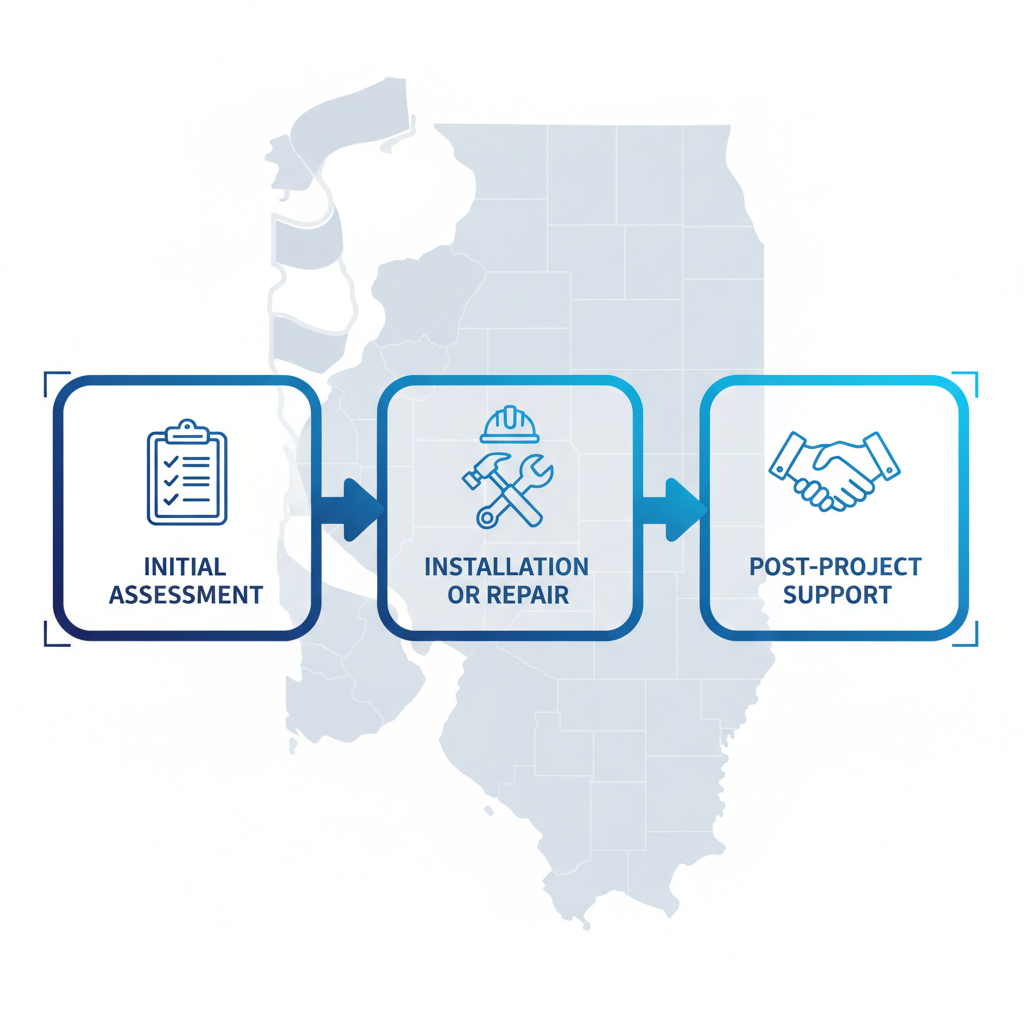
Commercial roofing process: assessment, installation, and ongoing support
Understanding these early phases empowers business owners to engage providers confidently, knowing the process emphasizes precision from the start.
Installation or Repair Execution
Once planning concludes, execution kicks off with material preparation and crew mobilization. For commercial roof repair, the focus is on targeted fixes like sealing leaks or patching storm damage, often completed in 2-5 days depending on severity. Technicians use high-quality sealants and reinforcements to restore integrity without full disruption.
In full installations, the step-by-step process varies by roof type. Low-profile commercial installations for sloped roofs involve layering shingles or metal panels, secured with fasteners to withstand Illinois gusts. For commercial flat roofing, crews apply single-ply membranes like TPO, heat-welding seams for waterproofing. Safety measures include harnesses, fall protection, and daily site briefings to safeguard workers and nearby operations.
Timelines for complete replacements span 1-4 weeks, influenced by roof size and weather. Emergency responses, such as those from River City’s 24/7 availability, arrive within hours for urgent commercial roof repair needs. Costs average $5-10 per square foot for repairs in the region, covering labor and materials. Numbered steps ensure continuity: 1) Surface prep and debris removal, 2) Base layer application, 3) Membrane or shingle installation, 4) Flashing and edge detailing, 5) Initial testing for leaks.
Businesses benefit from phased work to maintain partial access, with safety tips like securing outdoor areas and coordinating deliveries. This execution delivers robust results, addressing what to expect from the commercial roof repair process while minimizing downtime.
Post-Project Support and Warranty
Completion marks the shift to post-project support, starting with a final inspection to verify quality and compliance. Technicians walk through the site with you, demonstrating features and handing over care instructions. For Illinois businesses, this includes documentation for tax or insurance purposes, ensuring seamless integration into operations.
Warranties typically range from 10-30 years on materials, backed by manufacturer guarantees and workmanship pledges. River City Roofing provides claims assistance, simplifying any future adjustments. Ongoing maintenance schedules, recommended biannually, involve gutter cleaning and inspections to extend roof life amid Central Illinois’ variable climate.
Regional coverage extends support across areas, including roofing services Champaign IL, where teams handle follow-ups efficiently. If issues arise, contact protocols ensure prompt resolution, often within 48 hours. This phase answers concerns about long-term reliability, with average annual maintenance costs at $1-2 per square foot.
By prioritizing thorough support, the process fosters lasting partnerships, helping businesses sustain peak performance year-round.
Best Practices for Commercial Roof Maintenance
Maintaining a commercial roof in Central Illinois demands proactive strategies tailored to the region’s harsh winters, humid summers, and frequent storms. By implementing routine care, selecting durable materials, and preparing for emergencies, businesses can extend roof life, cut repair costs, and ensure operational continuity. These practices, informed by local expertise, help safeguard assets against Midwest weather variability.
Routine Inspection and Cleaning Routines
For corporate roof upkeep in Central Illinois, establish a biannual inspection schedule with professionals, plus monthly DIY checks to catch issues early. Schedule expert evaluations in spring and fall, or immediately after severe weather, to assess structural integrity and prevent minor problems from escalating. Routine maintenance saves 20-30% on future repairs, according to industry cost analyses, by addressing wear before it leads to leaks or structural damage.
Safe DIY routines focus on accessible areas without risking safety. Start with visual scans from ground level using binoculars to spot debris, cracks, or ponding water. Clear gutters and drains quarterly to maintain flow, especially vital during heavy Illinois rains. Use a soft brush for gentle cleaning of surface grime, avoiding harsh chemicals that could degrade materials. Check for signs of algae or moss growth, common in humid conditions, and trim overhanging branches to reduce debris accumulation.
- Monthly Checklist: Inspect flashing around vents and edges; test drainage paths for clogs; note any discoloration or bubbling.
- Seasonal Tips: After snowmelt, verify ice dam remnants; in summer, monitor for UV-induced fading.
These steps empower property managers to maintain vigilance, reducing downtime and extending roof warranties.
Material Selection and Upgrades
Choosing the right materials is crucial for commercial flat roofing in Central Illinois, where flat roofs dominate warehouses, offices, and retail spaces due to cost efficiency and ease of installation. Single-ply flat systems like TPO and EPDM offer robust options, balancing durability with local climate demands such as freeze-thaw cycles and high winds. Energy-efficient upgrades, like adding insulation with high R-values recommended for Illinois winters, can lower cooling costs by reflecting heat during sunny summers.
When selecting between TPO and EPDM, consider Illinois weather’s extremes: TPO excels in UV-heavy conditions, while EPDM handles cold flexibility better. For upgrades, prioritize cool roof technologies to combat urban heat islands in areas like Springfield. The following table compares key features of these materials for commercial flat roofing, highlighting their suitability.
| Feature | TPO | EPDM |
|---|---|---|
| Durability (Years) | 20-30 | 25-35 |
| Cost per Sq Ft | $5-8 | $4-7 |
| Installation Method | Heat-welded seams | Adhered or ballasted |
| Energy Efficiency | Reflective white surface | Black, may need coating |
| Repair Ease | Moderate, patch kits available | Easy, liquid applied |
| Best For Illinois Climate | Hot summers, UV resistance | Cold winters, flexible in freezes |
This comparison underscores TPO’s edge for energy savings in sunny Central Illinois conditions, potentially reducing HVAC loads, while EPDM’s longevity suits freeze-prone sites. Data from regional guidelines supports EPDM for high snow loads, but TPO’s reflectivity aligns with sustainability goals. Businesses should consult local installers for site assessments to optimize choices.
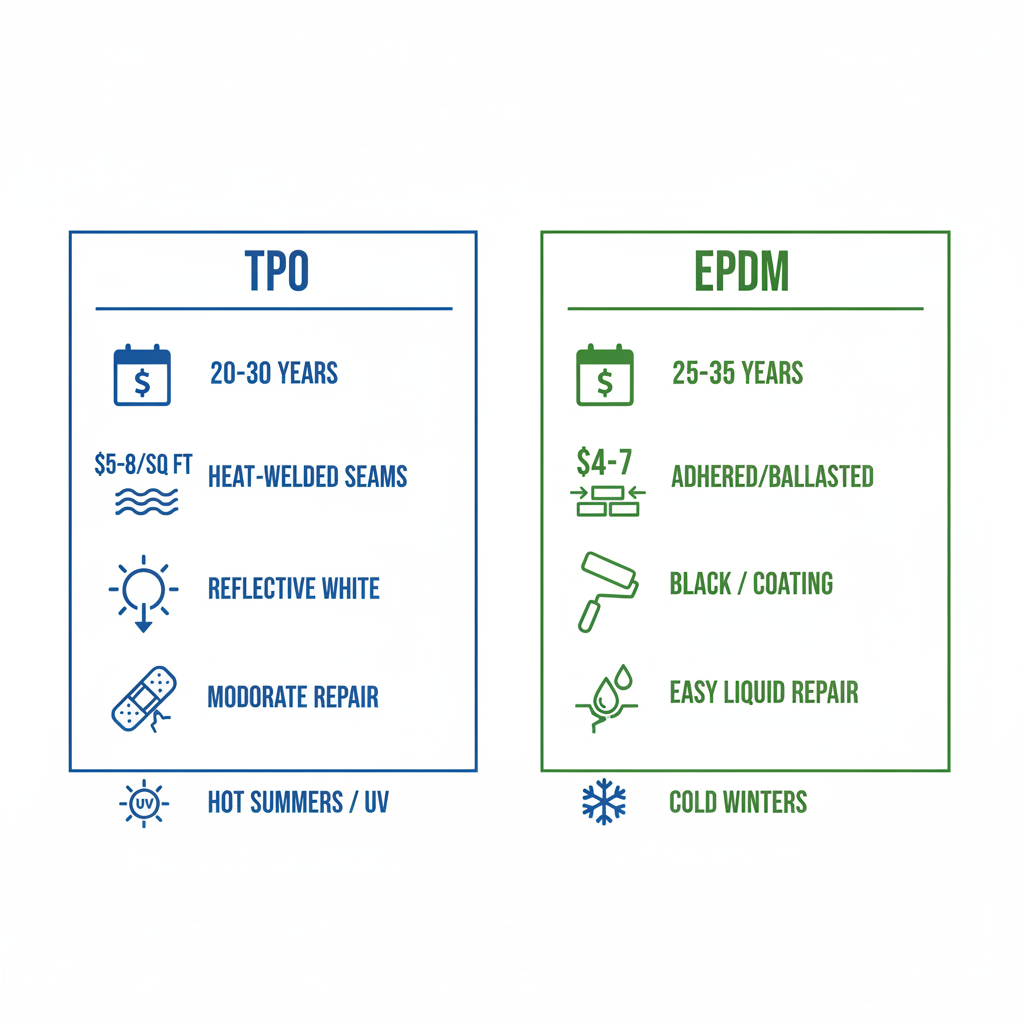
TPO vs EPDM comparison for commercial roof maintenance
Incorporating commercial roofing in Central Illinois with these upgrades not only boosts efficiency but also qualifies for potential rebates on reflective surfaces.
Emergency Preparedness Strategies
Storm season in Central Illinois requires robust emergency plans to minimize damage from hail, high winds, or heavy rain. Start by assembling an emergency kit with tarps, plywood, and sealing compounds for immediate coverage. Document roof conditions pre-storm with photos and videos to streamline insurance claims, ensuring quick recovery without prolonged business interruptions.
Partnering with reliable local experts accelerates response times. For commercial roof repair after events, contact trusted teams equipped for rapid assessments. Commercial roofing services Peoria exemplify GAF-certified pros offering 24/7 support, handling everything from temporary fixes to full restorations while navigating claims.
- Response Steps: Secure loose materials; avoid climbing wet roofs; notify insurers within 24 hours.
- Documentation Tips: Log damage details, including timestamps and measurements for accurate filings.
River City Roofing’s expertise in storm damage aids Central Illinois businesses, providing peace of mind through insured, licensed crews focused on swift, quality interventions.
Protecting Your Business with Reliable Roofing
In the heart of commercial roofing in Central Illinois, protecting your business starts with recognizing early signs of trouble, such as leaks or granule loss, and acting swiftly to avoid costly disruptions. River City Roofing has helped numerous Central Illinois companies through expert commercial roof repair, ensuring operations continue smoothly amid Midwest weather challenges. By choosing durable flat commercial systems, businesses achieve long-term protection that withstands harsh conditions while complying with local building codes.
The benefits extend far beyond immediate fixes: enhanced durability reduces future repair needs, leading to significant savings over time, and efficient processes minimize downtime during replacements or maintenance. Best practices, like routine inspections and proper ventilation, promote longevity for your commercial flat roofing, safeguarding assets against Illinois’ variable climate. With our GAF Master Elite certification, River City Roofing delivers proven quality that boosts energy efficiency and value for Midwest business roofing solutions.
Don’t wait for the next storm–our 24/7 emergency response and free estimates ensure rapid support across Illinois, Iowa, and beyond. For inspections, claims assistance, or statewide options, contact us today at 309-790-3146 or explore our roofing services Illinois to stay code-compliant and secure.