Spray Foam Roofing in Peoria: A Smart Solution for Commercial Buildings
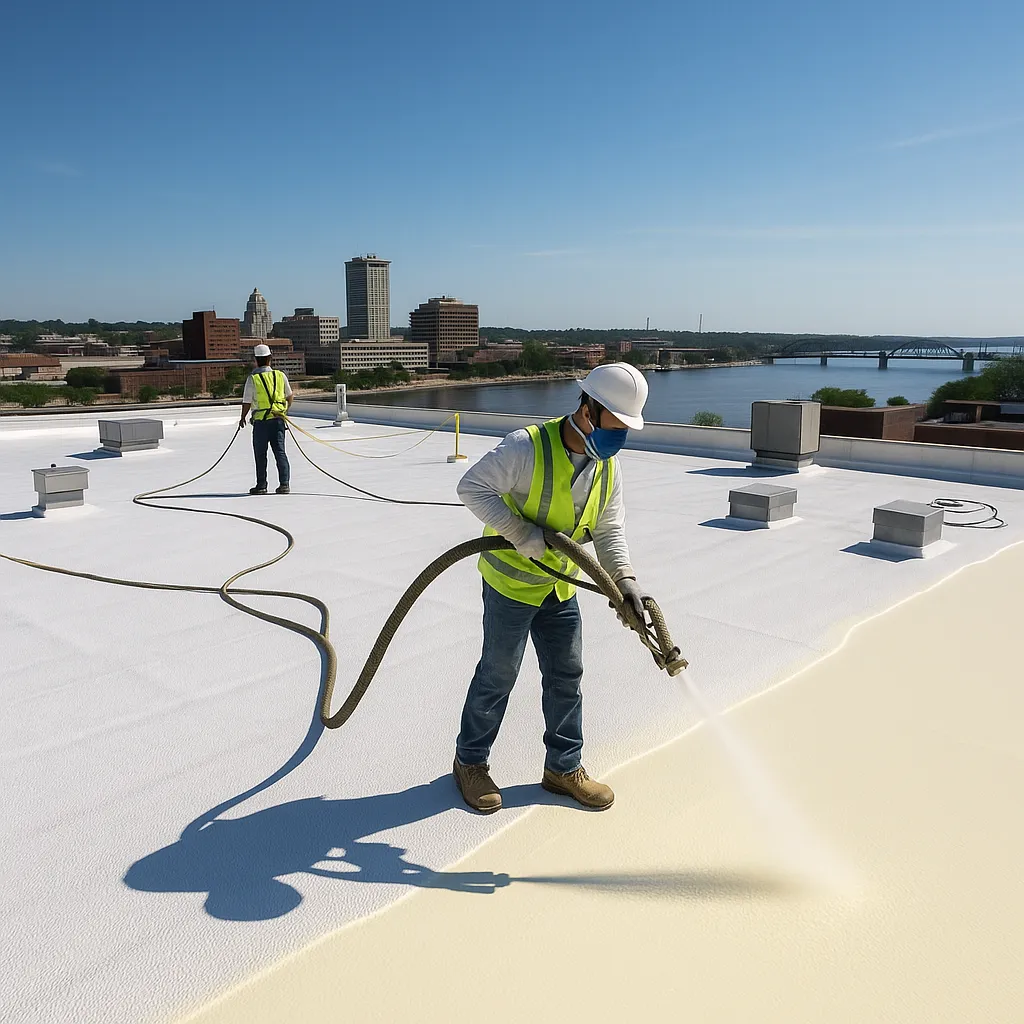
How SPF Roofing Works
Spray polyurethane foam roofing starts as two liquid components—A‑side isocyanate and B‑side polyol—pumped from 55‑gallon drums through heated hoses to a plural‑component gun. When they mix at 120 °F, the chemistry creates millions of closed cells that expand to roughly 1.5 inches, bonding to the substrate and forming a monolithic insulation layer. A 20‑mil silicone topcoat completes the system, adding UV protection and solar reflectivity.
Insulation Power and Energy Savings
At an R‑value of 6.5 per inch, SPF outperforms polyiso and XPS boards. Because foam is field‑applied, it seals every fastener penetration and deck‑panel joint, eliminating thermal bridges. A case study on University Street showed HVAC runtime dropped 27 % after a 50,000 sq ft roof received 1.5 in of SPF and a white silicone topcoat—saving $34,200 annually.
Seamless Waterproofing and Leak Prevention
Seams, laps, and mechanical fasteners are weak points in traditional single‑ply systems. SPF forms a continuous skin, wrapping penetrations without separate flashing pieces. Closed‑cell chemistry resists water migration, so even hail dents rarely leak. In most storm‑damage incidents, repairs involve simple silicone touch‑ups rather than membrane replacement.
Installation Speed and Minimal Disruption
SPF is spray‑applied at roughly 1,500 sq ft per hour under ideal weather. There is no tear‑off noise, no dumpsters blocking parking lots, and no heavy roll goods lifted by crane. Light overspray is mitigated with wind screens and dry‑fall foam that is easily swept away.
Maintenance and Longevity
An SPF roof can last 30–40 years when recoated every 12–15 years. Annual inspections look for coating thinning, mechanical damage, or UV chalking. Recoat cycles reset the warranty clock, making SPF one of the few ‘renewable’ commercial roofing assets.
Environmental Impact and Green Building Credits
SPF’s lightweight overlay avoids sending tons of tear‑off debris to Midwestern landfills. Silicone topcoats are low‑VOC and meet California Title 24 reflectivity requirements, enabling LEED v4 points under Energy & Atmosphere (EA) and Sustainable Sites (SS) categories. Ameren Illinois frequently offers rebates for reflective‑roof retrofits, accelerating payback.
Common Misconceptions About SPF
Myth 1: ‘Foam absorbs water.’ Closed‑cell SPF resists water absorption; if punctured, moisture remains localized and is detected during inspections. Myth 2: ‘Foam blows off in high winds.’ SPF is fully adhered; FEMA post‑hurricane studies show SPF roofs outperform mechanically fastened membranes in uplift resistance. Myth 3: ‘SPF is only for hot climates.’ The same insulation value that keeps heat out in July keeps heat in during February cold snaps.
Real‑World Case Study
A refrigerated distribution center on N Allen Rd battled $65,000 annual refrigeration costs due to thermal loss through an aging BUR roof. River City Roofs applied 2 in of SPF and a 25‑mil silicone topcoat. Post‑project energy monitoring recorded a 32 % reduction in compressor runtime, yielding a project payback of 3.8 years. Beyond the utility savings, the facility qualified for a one‑time $0.55 per sq ft reflective‑roof rebate from Ameren Illinois, trimming an additional $27,500 off project cost. Combined with accelerated depreciation under IRS Section 179, the net present value of the retrofit exceeded $380,000, making SPF not just an energy upgrade but a bottom‑line growth lever for ownership.
River City Roofs’ Proven SPF Workflow
Moisture scan → Deck pull‑tests → Power‑wash → Primer (if required) → 1.5–2 in SPF spray in lifts → Silicone topcoat with ceramic granules → Final QA core cuts → 20‑year NDL warranty registration.
Ready to slash energy costs and eliminate chronic leaks? **Book a complimentary SPF roof assessment with River City Roofs today.**
Lifecycle Cost Analysis for SPF
When owners pencil out total cost of ownership, SPF wins. Upfront cost averages $7–$9 per sq ft including coating. Over 30 years, three recoat cycles cost roughly $4 per sq ft. Compare that to two full membrane replacements at $12 per sq ft each, and SPF yields a 38 % savings before energy rebates are even tallied.
Installation Weather Windows
SPF requires substrate temps above 50 °F and relative humidity below 85 %. River City Roofs monitors dew‑point spread and adjusts catalyst ratios in real time, extending the spray season from early March through late November. Portable heaters and wind screens allow precise application even on breezy riverfront sites.
Safety & Overspray Control
Our crews erect 10‑ft wind screens, designate red‑zone perimeter areas, and use dry‑fall foam technology that becomes inert dust within 10 feet—protecting nearby vehicles. All technicians wear supplied‑air respirators certified to ANSI Z88.2, ensuring occupant safety on operational campuses.
SPF and Fire Ratings
Closed‑cell SPF meets ASTM E84 Class A flame‑spread ratings when top‑coated with 20 mil silicone embedded with ceramic granules. River City Roofs coordinates third‑party field tests to verify flame‑spread and smoke‑development indices, ensuring compliance with FM 4470 and local fire‑marshal regulations.
Tenant Impact Case Study
During a live‑load retrofit at a busy medical outpatient center, our SPF crew worked evenings, utilizing low‑odor chemistry and sound‑dampening spray equipment. Patient satisfaction scores held steady, and the building owner reported zero appointment cancellations—a testament to SPF’s low‑disruption profile.
SPF Warranty Structures
Manufacturers offer 10‑, 15‑, and 20‑year no‑dollar‑limit (NDL) warranties on SPF systems. River City Roofs performs adhesion pull tests and wet‑mil checks to guarantee the system meets spec, ensuring the warranty is registered and transferable should the building sell. Extended warranties often include free mid‑term inspections—another safeguard for owners.